Historic homes talk in whispers. Limewashed brick, hand-cut rock, thick plaster walls, a deck column used smooth by a century of greetings. Every element carries objective. Yet one feature frequently weakens that peaceful grace, even on otherwise well-liked residences: the chimney. Caps that look temporary, metal blinking that beams roughly at the ridge line, utility-driven discontinuations that clash with a 1907 Tudor or an 1880s Italianate. A custom smokeshaft shroud can repair the silhouette, support the roofscape, and safeguard the structure without sacrificing authenticity. Succeeded, it comes to be a subtle trademark of stewardship as opposed to a signboard for renovation.
I have stood in attic rooms above paneled libraries, feeling the thin line in between history and weather condition. A well-designed shroud is greater than a hat for the flue. It is a little architectural work, scaled to be checked out from the road yet technical sufficient to please a building researcher. The craft starts long before the steel is cut and gone after with folds up. It begins with your home, the design, the neighborhood, also the means the light drops at 4 p.m. on a winter afternoon.
Why a Shadow Becomes the Right Gesture
A chimney is currently an affirmation. On older homes, it is often the best-built component of the structure, a column of mass increasing unbroken from foundation to skies. Over time, water works at that mass. It finds hairline fractures, rides along blinking, accumulates in a mortar bed. Freeze-thaw cycles pry open joints. Birds, bees, and raccoons sign up with the tale. Numerous owners start with a pragmatic fix, a generic cap or a patch at the counterflashing. Your house takes a breath a little sigh, however the visual consistency is shed, and the water still locates a way.
A customized smokeshaft shadow takes the position that appeal and performance amplify one another. Effectively designed, it drops water easily, manages updraft and trigger control with interior testing or baffles, and shields stonework shoulders that have actually seen a hundred wintertimes. From the street, it reads as initial, or a minimum of inevitable, because it is scaled to the smokeshaft's mass, tuned to the roof's pitch, and finished in a product that belongs to the home's era.
Reading the House First
If you take one concept into the area, allow it be this: do not make the shadow in isolation. Research study your house in its whole. A Second Empire mansard wants a made up form, usually with mild curvature and finely proportioned cresting. A Georgian likes restriction and balance, nothing fussy at the horizon. Tile Style homes prosper on split roofing systems and refined darkness lines, so a shadow there might be a low, taut quantity with crisp seams that echo the timber shingle flowing. Craftsman cottages ask for weight and noticeable joinery, also in steel, with braces or stitch details that feel hand-wrought.
Material cues matter. If you see aged copper gutters, brass screen doors, or patinated bronze hardware, a copper shadow from a shop like Salvo Metal Works might be the natural selection, permitting the roofline to weather into a deep brown that will gradually flower with environment-friendly. If the home carries painted tin finials or zinc ridge caps, terne-coated stainless can nod to the historical combination while providing modern long life. Repainted steel can suit early american revival and farmhouses where white trim and black accents bring a silent discipline.
The smokeshaft itself is the key canvas. Count courses from the roofline to the crown. Observe the corbeling, the shoulders, the bond pattern in the block. Note the flue size and the number of flues. A single large shadow acting to serve four separate linings is a typical error. Each flue must be appreciated for feature and draft, even if the exterior composition fixes as a merged piece.
Draft, Dampness, and the Physics Under the Hood
A shadow alters the microclimate at the top of the chimney. That can be excellent or bad. Obtain the proportions and openings incorrect, you choke a fireplace that when attracted beautifully. Obtain them right, you maintain draft, shield the crown, and tame downdrafts in gusty conditions.
Think in regards to cost-free area and wind habits. You want enough open louver or evaluated aperture to equal, and ideally exceed, the cross-sectional location of the flue or flues under. Lots of installers work from a general rule in the range of 1.2 to 1.5 times the flue location for open ventilation, after that tailor that based on site exposure. On a crest-sited home with constant wind, I might push towards the higher side. In a well-sheltered metropolitan court, lower proportions can execute with dignity without visual fuss.
Screening is non-negotiable if you value safety, but screening can be chosen. Stainless 3/4 inch mesh stays the criterion, yet baffles or chemisettes within the shadow can catch stimulates while managing noticeable darkness inside the grille. Sloped roof coverings under the cap throw water away from the flue liners, especially crucial for liners serving gas appliances where dilution air brings constant wetness. Leak edges and hemmed returns must be part of the language, not afterthoughts.
Moisture monitoring includes the junction with stonework. I am stringent regarding counterflashing that rakes right into mortar joints on a reglet, established with lead wedges and sealer where historic practice permits, or with developed stainless where longevity overtakes romance. The shift needs to be functional. If you can not loosen and lift the skirt of the shroud in ten mins to evaluate, you will not check. The information you can not see, you lose.
Matching Building Styles Without Pastiching
A shadow should be well-versed in the home's dialect, not a caricature. The line in between fidelity and theatricality is fine. Below is how I parse it across a few typical styles seen in North American historical districts:
- Georgian and Federal homes take advantage of tidy cornice lines and a feeling of sensible calmness. For these, I keep the shroud reduced and in proportion, with a small crown profile, straight skirts, and marginal reveal at the joints. Repainted terne-coated stainless or pre-patinated copper can be sensible. Blind panels can camouflage internal supports, letting the mass reviewed as one. Tudor Resurgence often tends towards romantic massing, half-timbering, and steep roofings. Chimney often star as sculptural elements. Here, a taller shroud can work, verbalized with basic ribs that resemble timbering without aping it. If pots exist, the shroud should value their rhythm. Darker patinated copper or blackened stainless holds the state of mind. Prevent castled crenellations unless documented in the initial design. Craftsman and American Foursquare invite human-scaled craft. Rivets, folded up seams, and subtle brackets can show up, but they ought to appear like joinery, not design. A patinated copper top with splayed sides can mirror the geometry of tapered patio columns. When unsure, minimize the number of various expressions and allow one information bring the story. Mediterranean and Spanish Colonial homes combine plaster, ceramic tile, and iron. A shadow can borrow from functioned themes with laser-cut patterns just if the cutouts are limited and the panel density holds a darkness. Regularly, a stucco-finished chase with a bronze or copper crown, tight to the flues, lugs the intent. Think of sun and shadow, not accessory for its own sake.
Custom Suggests Coordination
A shadow is seldom a separated commission. It belongs to a household of roof and facade elements that set the tone: custom cupolas on carriage residences, Personalized Dormers that break a long eave, Customized Finials that stress a ridge, Personalized Roof covering Vents that disappear right into the design, Custom-made Snow Guards that shield rain gutters, even Custom-made Leader Boxes that quietly raise the downspout terminations. When a house owner calls after coping with a dissimilar set of off-the-shelf components, we typically step back and curate the full ensemble.
Salvo Metal Works, to call one shop that marries style level of sensitivity with technical rigor, often starts with scaled elevations rather than leaping to manufacture. They measure the roofing pitch, picture from numerous distances, and mark cornice heights and smokeshaft shoulders. I have enjoyed them establish mock-ups in raw sheet to examine sightlines, then adjust a half inch below, a quarter inch there, till the percentages take a breath. That persistence shows when the finished copper gets here, its seams crisp, its patina prepped to develop, its bolts selected to disappear.
The Practicalities: Codes, Clearances, and Real-World Constraints
Clients in some cases stress that a custom shadow will certainly contravene of building ordinance or insurance coverage demands. In technique, conformity is simple if the layout team appreciates clearances and flue discontinuations. Masonry fireplaces require their flue leaves at least a couple of inches over any horizontal deflection surface, and gas home appliances impose details venting criteria that can not be casually encased. Always different flues within the shroud and keep air space as called for by the liner or appliance producer. If any type of flue is steel, its listing governs the unit information and standoff distances.
Historic districts differ. Some commissions restrict visible rooftop changes. In these instances, a low-profile shroud in a surface that matches existing flashing can all but go away, resolving a water problem anonymously. Various other boards love to see period-appropriate copper job and will certainly applaud a thoughtfully scaled crown. Approach evaluation boards with drawings that speak their language, not shiny advertising provides. Show profiles, sections, and stormwater paths.
Budget restraints shape options equally as definitely as design. A one-off hand-patinated copper shroud with complicated ribbing costs greater than a tidy, coloured stainless system. Excellent stores will damage down choices so the proprietor can see where each buck includes durability or aesthetic splendor. I have actually changed a lot of thin-gauge caps within eight years to suggest bargain metal. A shadow must really feel copper finials unpreventable and irreversible, which suggests ideal density, appropriate stiffening, and a finish that will not announce every wet period with streaks.
Casework From the Field
A stone Tudor in a leafy midwestern area had an attractive, battered chimney. The crown was cracked, two terra-cotta flues were ghosting water, and a galvanized cap, established during a past roof covering replacement, blazed against the aged slate. The owner, a preservation-minded designer, wanted your home to read as if untouched. We rebuilt the crown with a correct overhang and drip kerf, sleeved the flues, and involved a custom store to develop a copper shroud. The piece sat reduced, with a hipped top and great mesh put behind basic upright ribs. After the very first season, the copper cleared up right into a deeper brownish. In the second, the faintest blush of verdi showed up at joints. The slate roofing system and copper now talk the exact same language, and the masonry has actually been dry ever since.
Another job, a coastal Federal-style home with relentless wind, posed a different issue. Downdrafts turned the living room fireplace into a smoke maker during nor'easter s. A formulaic cap had fallen short twice. We used wind tunnel data as a guide and developed a louvered copper shadow with a taller plenum and inner baffles, boosting the complimentary area 40 percent over flue cross-section. The result preserved the home's calmness from the road, yet in storms the fire place drew cleanly, no smoke, no hassle. The insurance company authorized off when we documented clearances and products, and the proprietor reported the only complaint originated from a pair of gulls that shed a preferred perch.
Fabrication Information that Different Treasure from Stopgap
What resembles straightforward metalwork remains in fact a little grammar of decisions.
- Gauge and alloy impact longevity and line quality. For copper, 20 to 24 ounce sheet fits most shrouds. Go heavier if covering large distances without interior framework. For stainless, 24 to 20 scale, with coatings selected for reduced glow, checks out best on historical facades. Seams tell a story. Folded and hemmed sides not just stiffen panels however also guard against oil canning and sharp sides. Solder deal with copper should be tidy and minimal, not deposits that telegraph panic. Rivets can be commemorated or hidden. When visible, they need to be laid in even rhythms that line up with building axes. Internal framework issues more than you think. A well-conceived skeletal system in stainless or aluminum maintains panels from drumming in wind, enables thermal activity, and offers very discreet attaching factors. Welds must be continual where exposure needs, tack where motion is needed. Finish and patination are worthy of intent. Pre-patinated copper can be defined to land in a target range, then allowed to advance. Painted steels ought to be prepared with systems suitable to coastal or industrial atmospheres as needed. Nothing lowers a shadow much faster than peeling paint and rust discolorations down the brick. Removability is a virtue. Develop the item to be raised, checked, and re-installed without drama. Hidden set screws, captured nuts, and thoughtful overlap series make the distinction between a treasure part and a permanent headache.
Integrating With Connected Elements
Historic homes seldom require simply one touch. A natural strategy typically includes neighboring elements that either harmonize with the shadow or retreat right into a neutral history. Custom Roofing Vents can be profiled to resemble dormer cheek lines, preventing the sore-thumb appearance of manufacturing facility mushroom caps. Custom Snow Guards on slate or standing-seam metal roofings secure copper gutters and, when gotten in a surface that matches blinking or shroud metal, checked out as willful jewelry rather than equipment. Custom-made Leader Boxes turn the downspout change right into a handsome termination, an information you discover subconsciously when strolling up the front path.
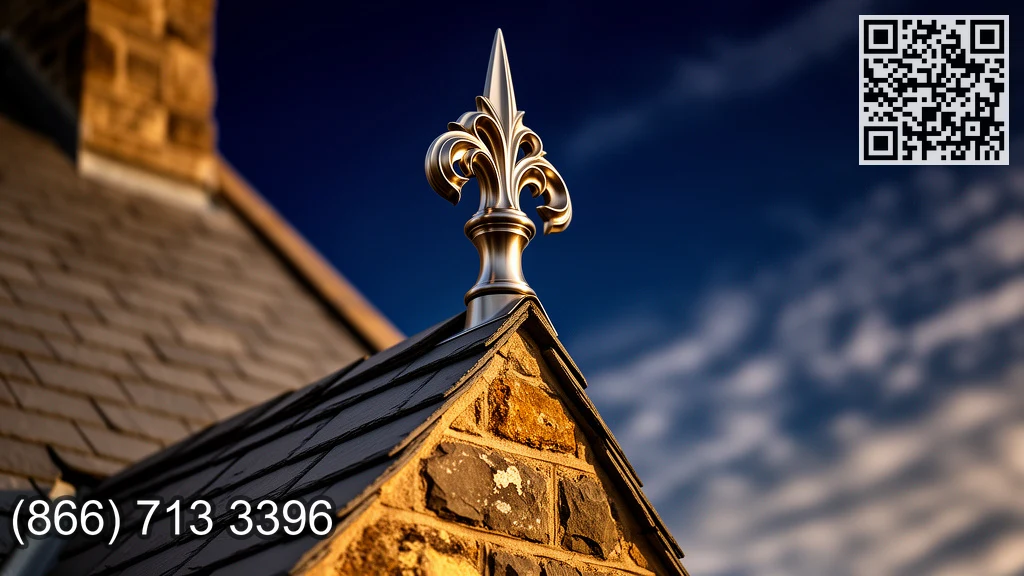
On carriage residences or visitor cottages, custom-made cupolas can reintroduce a shed vertical note. Treated with the same metal and seam language as the chimney shroud, they bind the make-up. Custom-made Dormers, particularly on long, unbroken eaves, can be formed to suit second-floor light requirements while regulating the rhythm of the facade. And where a roofing system ridge begs for punctuation, Customized Finials, appropriately scaled and moderately made use bespoke copper finial of, bring a shimmer that links back to the shroud's patina.
Weather, Maintenance, and the Straightforward Work of Stewardship
No steel is genuinely maintenance-free, particularly in difficult environments. Copper rewards perseverance and mild cleaning; enable it to darken, stand up to the urge to brighten bright unless that is a documented historical intent. Stainless will shake off most conditions, but roof cement and acidic washdown from specific rocks can etch or discolor if left unaddressed. After installation, timetable a 1 year and three-year assessment. Clear particles, check fasteners, validate that bird and insect pressure has not developed a home where you least desire it. A five-minute rinse from the crown after plant pollen season can maintain discoloration at bay.
Snow lots and ice creep are not abstract worries. If you stay in a climate with heavy roof covering dropping, make certain the shroud's top faces can take influence or are secured by a little diverter simply upslope. The diverter must be subtle, folded up to the roof profile, and ended up to disappear. Warm cable televisions and snow guards positioned wisely can save you a winter season emergency situation telephone call. These aspects require not intrude aesthetically if developed and completed in the exact same scheme as the shroud and flashing.
When the Modern Satisfies the Historic
Many historic crowning achievement contemporary appliances with old chimneys. Central heating boiler relines, direct-vent inserts, kitchen area tires sometimes share a stack. A custom shadow should appreciate the mechanical fact of those systems while safeguarding the heritage materials around them. That might suggest an internal stainless chase inside the masonry, capped separately underneath a unifying external crown. It may likewise ask for separating a high-temperature device flue from the shadow's body to maintain listing clearances. A seasoned producer will coordinate with the a/c or fireplace contractor, not guess.
Intake and exhaust separations are not just code boxes to inspect, they are efficiency basics. Where feasible, relocate competing infiltrations, after that let the shroud offer the flues that belong. If moving is impossible, style a multi-height crown that provides each flue a clear pressure zone, all within a single sculptural envelope. Done with dignity, the audience never ever checks out the complexity.
Cost, Worth, and the Long View
Clients in some cases ask why a custom piece from a shop like Salvo Metal Works costs a number of times greater than a directory cap. The short answer is suitable and surface. The lengthy response is time. You pay for measured illustrations, for mock-ups that conserve you from a permanent incorrect note, for the alloys that will not tear themselves apart under thermal cycling, and for a coating that will only look better a decade from currently. You likewise spend for the ideal kind of invisibility: details that virtually no person will notice, because they create no difficulty and fit your house as if they had actually constantly been present.
In numerical terms, custom-made copper shrouds for solitary flue chimneys on historic homes commonly land in the mid-four figures, climbing with intricacy, height, and inner framework. Multi-flue settings up on big residences, particularly with tough accessibility or heavy building constraints, can reach right into the reduced 5 numbers. Upkeep costs stay small if the style is functional. Contrast that with the price of repeated stonework repair services, plaster remediation, and the peaceful resentment that adheres to a visual concession and it becomes a simple choice for owners who assume generationally.
A Short, Sensible Course to the Right Result
If you are stewarding a historic home and considering a shroud, follow a tight series that appreciates both looks and developing science.
- Document the existing conditions. Pictures from street, backyard, and roofing, plus dimensions of the chimney, flues, and nearby roofing system slopes. Verify the mechanical tale. Identify every flue, its home appliance or fire place, its lining kind, and any type of code or listing limits. Sketch the roofline. Not art, simply percentages. Note ridge height, dormers, and sightlines from common vantage points. Interview a fabricator with historical level of sensitivity. Ask to see installed work on homes like your own, not just go shopping photos. Mock-up, then improve. Cardboard or slim sheet prototypes on the roofing will certainly expose scale concerns in five mins that a screen never ever will.
These 5 steps occupy days, not months, and they save years of regret.
A Last Word on Restriction and Pleasure
The finest custom-made chimney shrouds do not shout. They edit the roofline, deepen the personality, and resolve the eye. A passerby may not observe the modification in all, just feel that the house looks right. For the proprietor, the pleasure runs deeper. There is a silent fulfillment in seeing copper seams catch low sunlight, in hearing rain harmlessly touch a crown that once saturated stonework, in understanding that an issue was solved with elegance instead of workaround.
Historic houses instruct perseverance. They compensate those that match courage with treatment, that pick products that age with self-respect, who stand up to the quick fix and invest in the lengthy arc. A custom shadow rests at that junction. It is a modest high-end, a little job of craft that earns its area daily, period after season, as weather condition moves over your roof and your home carries its history forward.
Salvo Metal Works
Office - (630) 857-3631
Toll Free- (866) 713-3396
[email protected]
566 W 5th Ave, Naperville, IL 60563
 Ask ChatGPT
 Ask Grok
 Ask Perplexity
 Ask Claude
 Ask Google AI
 Ask You